
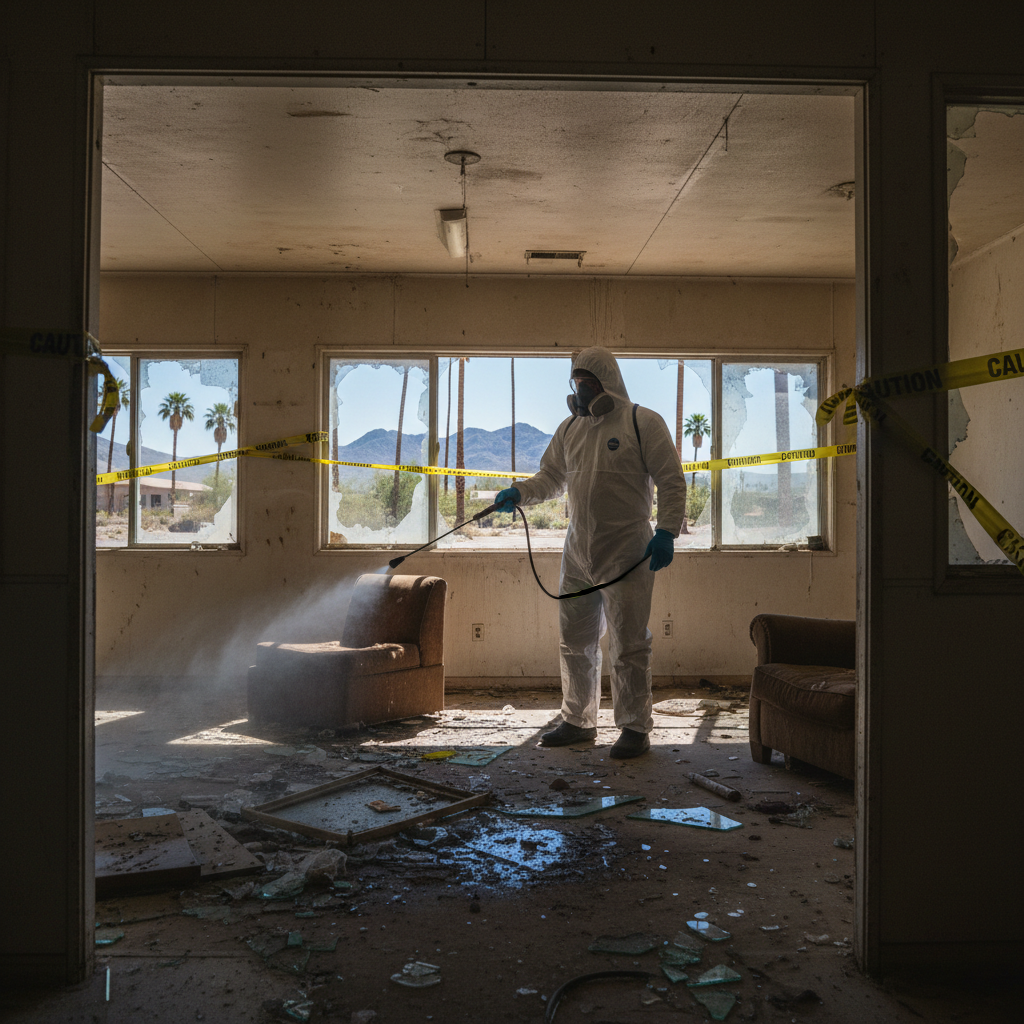
Downtown Phoenix's housing stock mixes early-1900s brick apartments and former industrial buildings with newer high-rises along Roosevelt Row and near the Arizona State Capitol. Many structures date to the 1920s-1950s, featuring narrow corridors, basement levels, and shared walls that complicate access during biohazard incidents. Daniel Carter's crews routinely work these dense blocks where older plumbing and limited ventilation increase exposure risks.
Maricopa County's desert climate brings year-round heat that speeds biological breakdown, while monsoon storms can flood streets near Papago Park edges and push contaminants into ground-floor units. Emergency Biohazard Removal calls spike after heavy rains when water carries materials through alleys behind Footprint Center or along Central Avenue. Low humidity dries surfaces quickly but leaves hidden residues in concrete and HVAC systems common in 85004 buildings.
Around Downtown Phoenix
We regularly work near:
- 📍Chase Field
- 📍Phoenix Convention Center
- 📍Footprint Center
- 📍Roosevelt Row Arts District
- 📍Arizona State Capitol
Local Details for Downtown Phoenix
- Tight one-way streets and event traffic around Chase Field require rapid staging to reach interior units without blocking access.
- Pre-1960s buildings near the State Capitol often have outdated ductwork where heat drives odors into neighboring spaces.
- Monsoon flooding along Washington Street can carry materials from street level into commercial basements within minutes.