
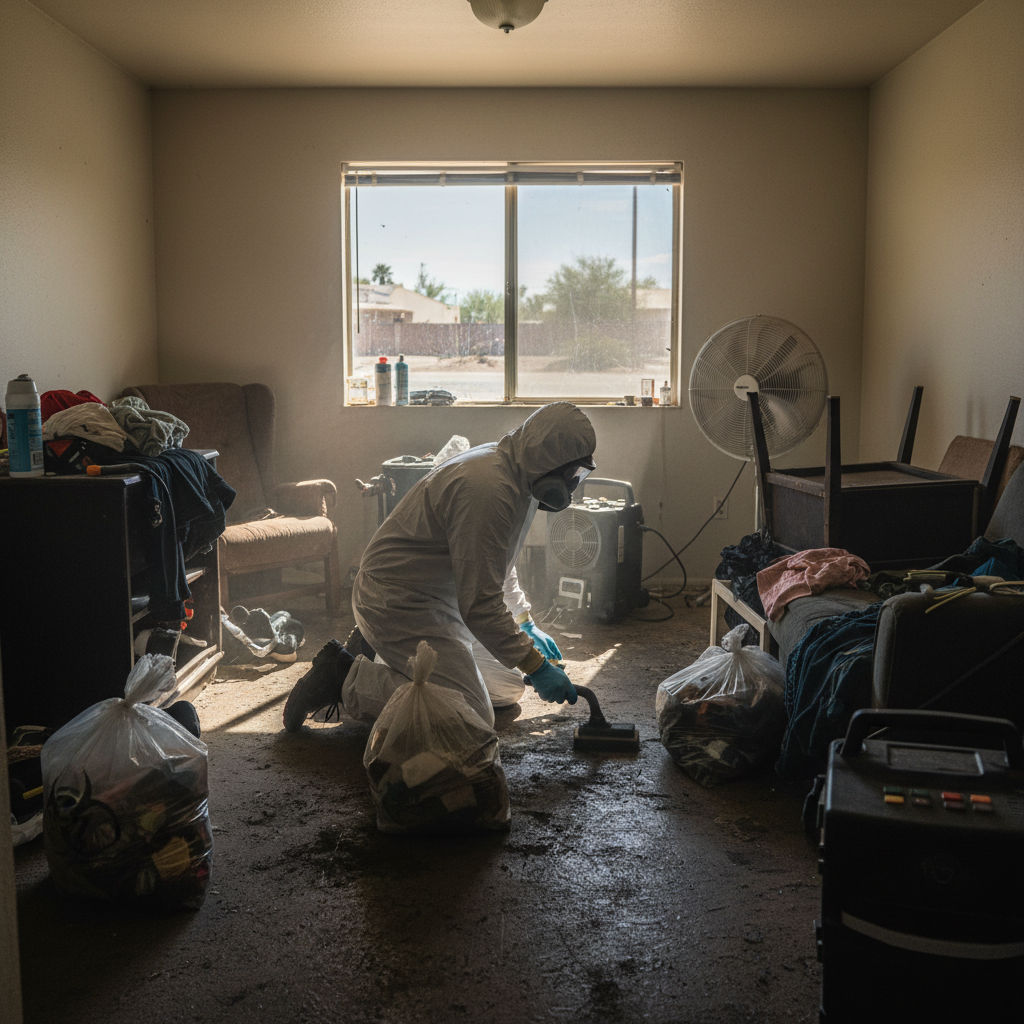
Phoenix summers push temperatures past 110°F for weeks, drying rodent waste into fine dust that becomes airborne during monsoon wind gusts or routine attic access. Homes in Alhambra and Midtown Phoenix built before 1980 often have unsealed soffits and crawlspaces where pack rats and roof rats nest, leaving concentrated droppings near insulation and HVAC returns. Daniel Carter’s crews use HEPA vacuums and full-face respirators before any disturbance because the county’s low humidity keeps viral particles viable longer than in humid regions.
Older single-story block homes in Encanto Village and Sunnyslope frequently show droppings along ceiling joists above laundry rooms where plumbing penetrations allow rodent entry. Summer heat accelerates decomposition, creating brittle pellets that crumble into respirable particles during removal. Crews wet surfaces first with EPA-registered disinfectants, bag waste in doubled liners, and remove contaminated insulation in sealed containers to prevent cross-contamination into living spaces.
Service extends across Maricopa County into Scottsdale, Tempe, and Avondale where newer stucco homes still develop attic infestations after monsoon flooding forces rodents indoors. Arizona health guidelines require notification when hantavirus is suspected, so every job includes documentation of waste volume and disposal method at permitted facilities. Work stops if live rodents remain, requiring coordination with licensed trappers before final decontamination.
Technician insight
In Phoenix the combination of 100-plus degree days and monsoon dust means droppings left untouched for even a month become powder that travels through every unsealed soffit. We always check for live rodent activity first because heat-stressed animals move into wall voids near AC units.
Encanto Village attic after monsoon
A 1965 block home near the Heard Museum showed droppings along rafters after heavy rain pushed roof rats inside. Crews contained the space, removed 18 bags of waste, and replaced insulation before the next heat wave dried remaining particles.
Rodent Droppings Cleanup Services We Offer
✓Attic Rodent Droppings Removal
Full containment and HEPA extraction of dried waste from Phoenix attics where extreme heat turns pellets into airborne dust.
✓Garage Biohazard Cleanup
Removal of droppings and urine from concrete floors and storage areas common in single-car garages throughout Deer Valley and North Mountain.
✓Crawlspace Waste Extraction
Targeted cleaning under older homes in Maryvale and Alhambra where low humidity preserves waste near soil and ductwork.
✓HVAC Contamination Remediation
Clearing droppings near returns and ducts in Midtown Phoenix homes to stop circulation of particles after rodent activity.
✓Post-Monsoon Droppings Cleanup
Rapid response after summer storms drive rodents into homes in Ahwatukee Foothills and Laveen, preventing secondary mold growth on waste.
Rodent Droppings Cleanup Cost in Phoenix, Arizona
| Service | Typical Range | What Affects It |
|---|---|---|
| Standard attic cleanup | $450–$850 | Depends on square footage and insulation replacement |
| Garage floor and wall removal | $250–$500 | Concrete sealing adds cost |
| Crawlspace extraction | $600–$1,100 | Moisture or extensive insulation increases price |
| HVAC-adjacent cleanup | $350–$700 | Duct cleaning coordination required |
Ranges are typical for Phoenix, Arizona and confirmed with an exact written quote before any work starts.
How it works
- 1
Initial Assessment
Inspect attics, garages, and crawlspaces in Phoenix homes for droppings volume and entry points without disturbing dust.
- 2
Containment Setup
Seal HVAC returns and living areas using plastic sheeting to prevent particle migration during removal.
- 3
Wet Cleaning and Bagging
Apply disinfectant to droppings, vacuum with HEPA equipment, and double-bag all waste for licensed disposal.
- 4
Final Verification
Re-inspect surfaces and test airflow in treated spaces before releasing the property back to the owner.