
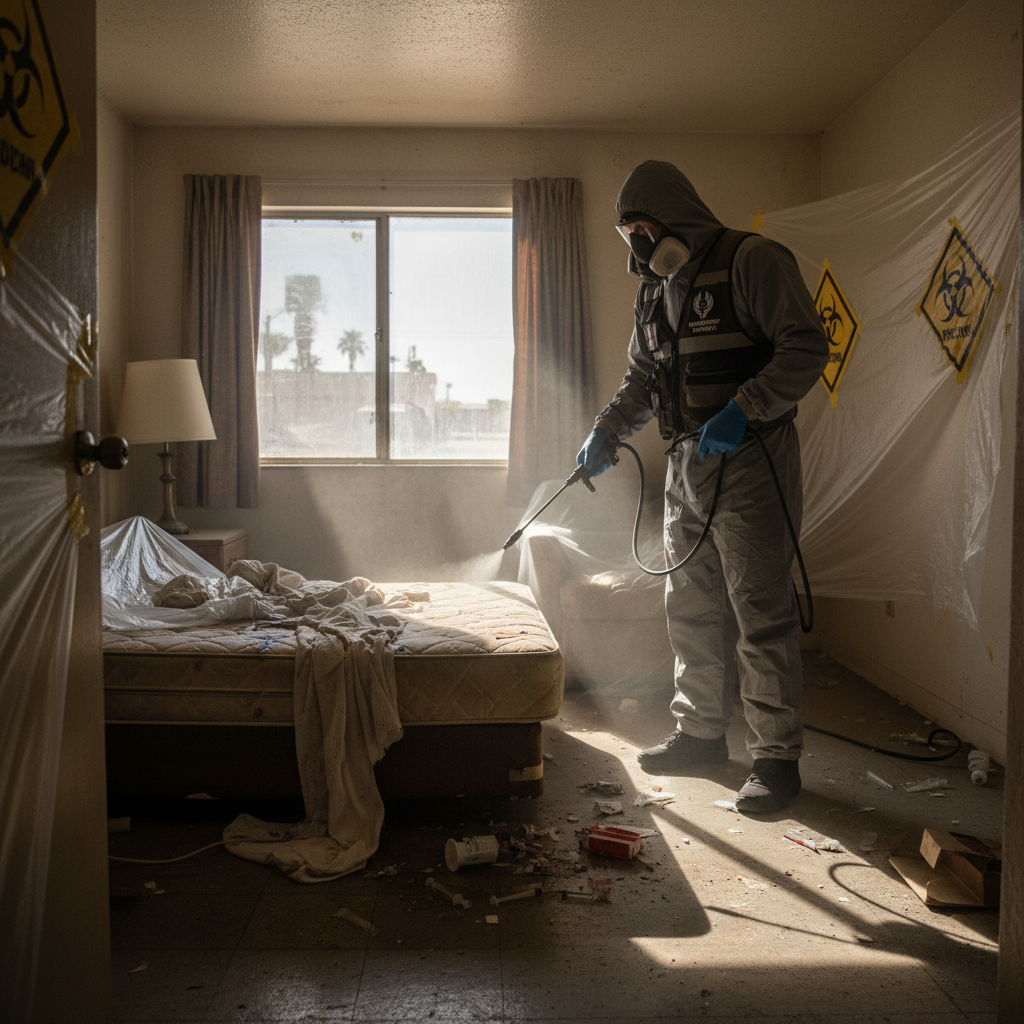
Phoenix summers push vehicle interiors past 140 degrees, speeding decomposition of blood and tissue left in cars parked on streets in Alhambra or Maryvale. Monsoon dust and sudden flooding around South Mountain Park and Preserve trap moisture under seats and in trunks, creating hidden mold and odor pockets that standard detailing misses. Daniel Carter sees these patterns weekly when owners call after incidents near Phoenix Sky Harbor or the Roosevelt Row Arts District.
Carpet, headliners, and HVAC systems in older trucks common around Estrella and Laveen hold pathogens that survive dry heat yet reactivate during humidity spikes. EPA-registered disinfectants must reach behind panels without damaging electronics or leaving residue that triggers new complaints in the confined space of a sedan. Proper negative air and HEPA extraction prevent cross-contamination into the passenger cabin, a step that matters on vehicles used for rideshare work across Downtown Phoenix and Camelback East.
Daniel Carter covers the full Maricopa County footprint from Avondale to Fountain Hills, including fleet vans that serve construction sites near State Farm Stadium. Work follows OSHA bloodborne pathogen standards and Arizona solid-waste rules for regulated medical waste transport. Documentation is provided for insurance and property managers handling incidents in Paradise Valley Village or Deer Valley.
Heat also warps plastic trim and adhesives, so removal protocols must account for material failure before aggressive scrubbing begins.
Technician insight
Phoenix dust storms embed particles into fabrics already saturated with fluids, requiring extra extraction passes that coastal crews rarely need. Vehicles parked outdoors year-round also show faster adhesive breakdown, so panels must be handled gently to avoid further damage during removal.
Rideshare van after medical emergency
A driver in Deer Valley found dried fluids under rear seats after a passenger incident during monsoon season. Daniel Carter removed the carpet sections, treated the metal floor, and cleared the HVAC before the van returned to service near the Convention Center.
Vehicle Biohazard Decontamination Services We Offer
✓Blood Spill Removal from Vehicle Interiors
Extracts dried and fresh blood from seats, carpets, and door panels while neutralizing odors that linger in hot Phoenix vehicles.
✓Bodily Fluid Decontamination in Trucks and Vans
Targets urine, vomit, and fecal matter trapped in cargo areas common on work trucks parked in South Mountain and Laveen.
✓Pathogen Removal After Infectious Incidents
Applies hospital-grade disinfectants to surfaces and HVAC systems following illness events in rideshare vehicles operating near the airport.
✓Decomposition Cleanup in Parked Cars
Removes tissue and fluids from vehicles left in extreme summer heat around Encanto Village and North Mountain, restoring safe use.
✓Trauma Scene Vehicle Restoration
Cleans blood and tissue from crime or accident scenes while protecting upholstery and electronics in cars throughout Maricopa County.
Vehicle Biohazard Decontamination Cost in Phoenix, Arizona
| Service | Typical Range | What Affects It |
|---|---|---|
| Standard sedan interior | $350–$650 | Single-event blood or fluid spill |
| Truck or van cargo area | $450–$850 | Larger volume and porous surfaces |
| Decomposition cleanup | $600–$1,200 | Extended exposure in summer heat |
| Full vehicle ozone and detail | $250–$400 | Added after primary decontamination |
Ranges are typical for Phoenix, Arizona and confirmed with an exact written quote before any work starts.
How it works
- 1
Site Assessment
Inspect the vehicle at its location in neighborhoods such as Uptown Phoenix or near Papago Park to map contamination extent.
- 2
Containment Setup
Seal the vehicle and establish negative air to stop aerosol spread during removal in dusty desert conditions.
- 3
Material Extraction
Remove saturated carpets, seats, and panels using EPA-listed agents suited to high-heat Phoenix interiors.
- 4
Disinfection and Verification
Apply targeted disinfectants, then test surfaces before reassembly and final odor neutralization.