
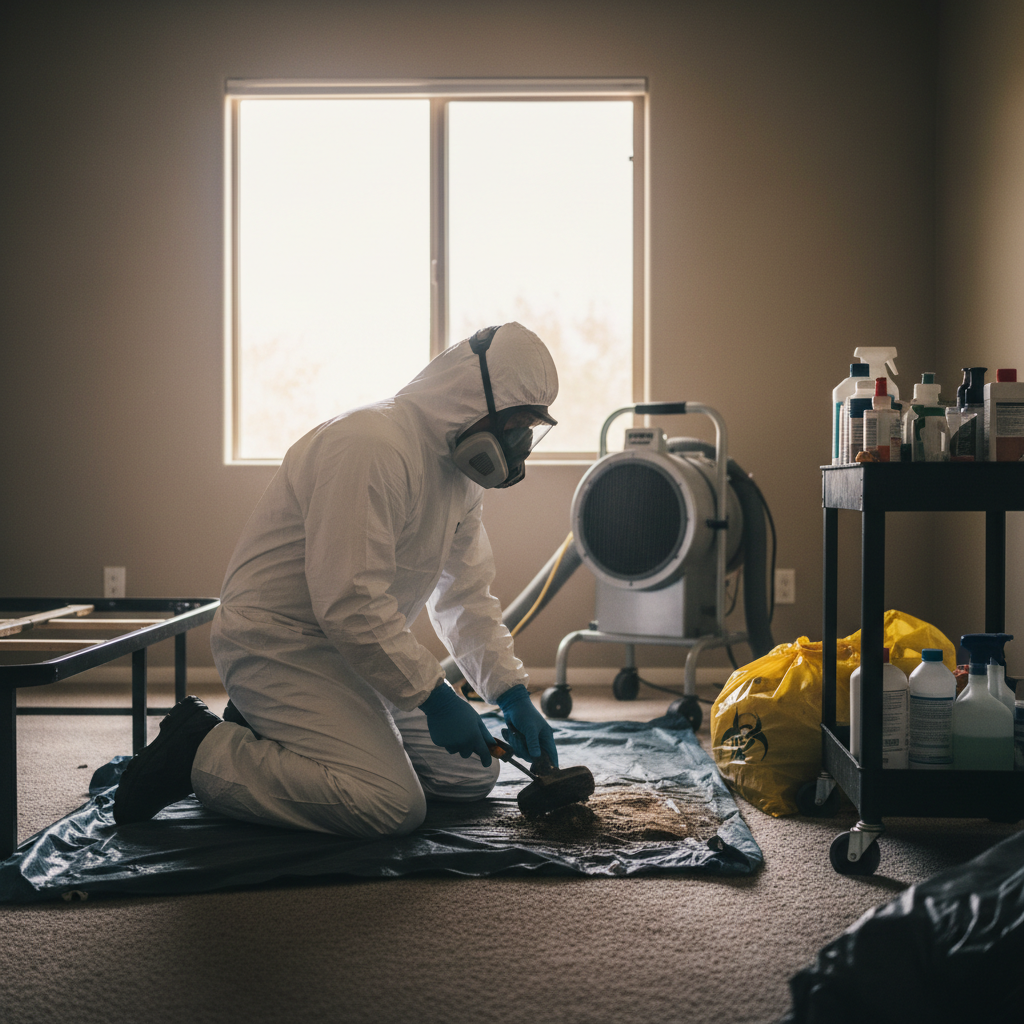
Phoenix summers push temperatures past 110 degrees and monsoon rains dump sudden floods that spread blood and fluids through older stucco homes in Encanto Village and Midtown. These conditions speed decomposition and create hidden contamination in crawl spaces and wall voids that standard cleaners miss. Daniel Carter works year-round in Maricopa County knowing that dry heat bakes residues into concrete slabs while humidity spikes from storms force rapid mold growth on top of biological matter. Crews stage equipment at properties near Camelback Mountain or South Mountain Park where narrow driveways and desert landscaping limit access and require smaller response vehicles.
Many Phoenix homes built before 1980 in Alhambra, Roosevelt Row, and Sunnyslope still have original carpet pads, popcorn ceilings, and single-pane windows that trap fluids and odors. Trauma scenes often involve porous drywall, tile grout, and HVAC ducts that must be removed or fogged rather than wiped. Daniel Carter follows OSHA bloodborne pathogen standards and Maricopa County solid-waste rules for transporting contaminated materials to approved facilities, avoiding any cross-contamination during transport across the Valley. Edge cases include scenes on upper floors of multi-family buildings in Deer Valley or Laveen where elevator access and neighbor privacy add layers of planning.
Service reaches from Downtown Phoenix and Paradise Valley Village to outlying spots like Ahwatukee Foothills, Avondale, and Goodyear. After every job the team documents chain-of-custody for any regulated waste and leaves the property ready for reconstruction crews. Local terrain with caliche soil and frequent dust storms means extra sealing of doorways to prevent airborne particles from re-contaminating freshly sanitized surfaces. Daniel Carter coordinates with property managers and insurance adjusters familiar with Phoenix claims so owners in Maryvale or Estrella avoid delays from monsoon-related scheduling conflicts.
Technician insight
Dry Phoenix air makes surface cleaning look complete while fluids remain trapped in concrete and stucco; monsoon humidity then reactivates odors weeks later if not fully extracted. Older neighborhoods like Encanto and Sunnyslope often require full drywall removal rather than surface treatment.
Monsoon-related unattended death in Alhambra
After a week-long monsoon power outage, decomposition fluids reached the slab in a 1960s Alhambra duplex. Crews removed sections of flooring and ran dehumidifiers for 48 hours before sanitizing to prevent mold regrowth during the next humidity spike.
Trauma Cleanup Service Services We Offer
✓Unattended Death Cleanup
Removes fluids and odors from extended decomposition in Phoenix homes, protecting remaining occupants from pathogens and structural damage.
✓Homicide Scene Restoration
Cleans blood and tissue from walls, floors, and furnishings while preserving evidence integrity for Maricopa County investigations.
✓Suicide Cleanup
Discreet removal of biohazards and emotional triggers from bedrooms and bathrooms in neighborhoods like Camelback East and North Mountain.
✓Accident Trauma Removal
Handles vehicle-related or household injury scenes, extracting fluids from garages, driveways, and interior spaces in areas such as Ahwatukee Foothills.
✓Bloodborne Pathogen Decontamination
Applies EPA-registered disinfectants to porous and non-porous surfaces after any trauma event to meet Arizona health department requirements.
✓Odor Elimination Treatment
Neutralizes embedded smells from bodily fluids in HVAC systems and insulation common in older Phoenix housing stock.
Trauma Cleanup Service Cost in Phoenix, Arizona
| Service | Typical Range | What Affects It |
|---|---|---|
| Single room trauma scene | $800–$2,200 | Depends on fluid penetration into subfloor or drywall |
| Whole-home decontamination | $3,500–$7,500 | Increases with HVAC involvement or multiple levels |
| Vehicle interior cleanup | $600–$1,800 | Higher for blood in upholstery or trunk areas |
| Odor treatment add-on | $400–$1,200 | Required when decomposition has affected insulation |
Ranges are typical for Phoenix, Arizona and confirmed with an exact written quote before any work starts.
How it works
- 1
Initial Assessment
Daniel Carter inspects the Phoenix property, notes affected materials, and checks for hidden spread into attics or slabs common after monsoon moisture.
- 2
Containment Setup
Plastic barriers and negative air machines isolate the scene to protect adjacent rooms in multi-unit buildings across Midtown and Uptown Phoenix.
- 3
Biohazard Removal
All contaminated items are bagged and removed following Maricopa County waste transport rules before deep cleaning begins.
- 4
Sanitization and Verification
Surfaces receive hospital-grade disinfectants and ATP testing confirms pathogen reduction before any reconstruction.
- 5
Final Clearance
Property is returned to the owner with documentation suitable for insurance and local health officials.